← Back to Resources & Archives
Cabot has always been a town of farmers and tradespeople — millwrights and sugar-makers, storekeepers and creamery hands — and, now and then, a citizen whose gifts carried the town's name far beyond the hills. These are a few of the people and trades that made Cabot.
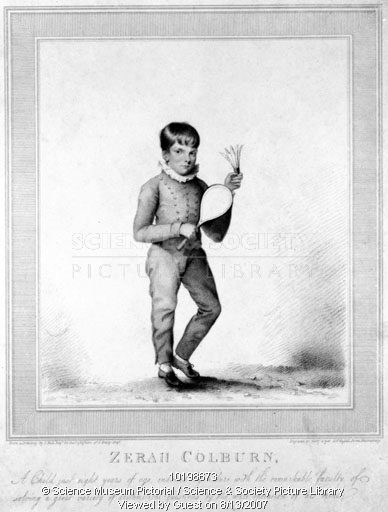
Zerah Colburn, the Calculating Child
Cabot's most famous native was born on a farm along today's Danville Hill Road on September 1, 1804. One autumn day in 1810, Abia Colburn overheard his not-quite-six-year-old son reciting multiplication tables in the wood chips beside his joiner's bench. The boy, with only a few weeks of schooling, could multiply large numbers in his head faster than they could be worked on paper. Word spread quickly, and "the Calculating Child" was soon examined by judges in Danville and legislators in Montpelier — where, asked how many black beans would make five white ones, he shot back, "Five, if you skin them."
Unable to find schooling for such a gifted child in sparsely settled Vermont, Abia took Zerah on the road — to Boston, then across the Atlantic in 1812 to London, Paris, and beyond, exhibiting the boy before dukes and kings while chasing the money to educate him. Patrons including the Earl of Bristol eventually placed Zerah at Westminster School, but the promised support never lasted. After his father's death in 1824, Zerah returned to Cabot after thirteen years away — mother and son meeting again as strangers. He became a Methodist minister and, in 1835, a professor of languages at Norwich University, and published a candid memoir of his strange childhood before his death in 1839. He remains one of the most remarkable of all recorded mental calculators.
Mills, Shops & Trades
Industry in Cabot followed its water and its woods. The town's first sawmill and grist mill were built on the Winooski River in 1789, alongside what is now Main Street, and mills of every kind followed as the village grew. Down in "the hollow" beside the river stood the Cabot Carriage Company, where a young Charles Willey learned to paint sleighs before founding the New York firm that later funded Willey Memorial Hall. Over the years the town supported an array of trades — early distilleries, blacksmiths and joiners, storekeepers and newspapers, logging operations around Joe's Pond. At Maple Glen Farm, Alonzo Foster invented an improved sap spout, and his covered bridge still stands (see Land & Local Life).
Families & Neighbors
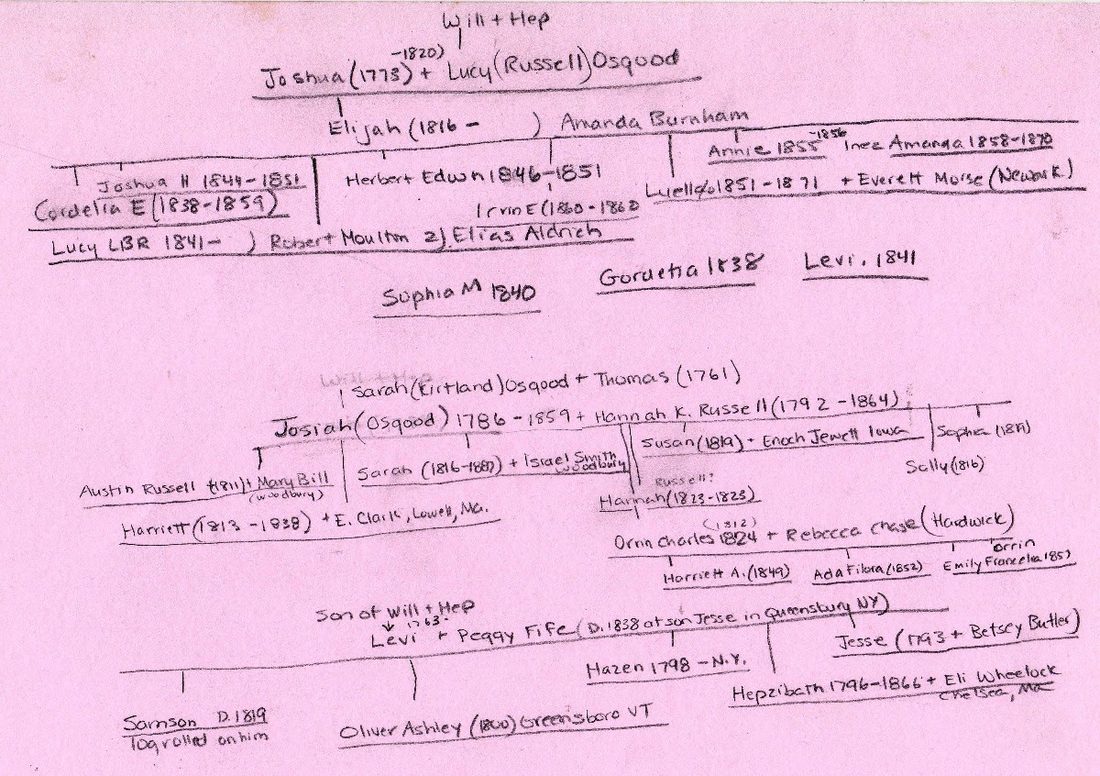
Much of Cabot's story is really the story of its families — the Osgoods, Fishers, Lyfords, Websters, Fosters, and many more — who farmed the hills, kept the shops, taught the schools, and served the town across generations. The Society's collection includes family histories, genealogies, business records, and the recollections of those who "lived or worked in Cabot," along with the tantalizing "Mystery Slides" — old photographs whose subjects we are still working to identify.
The original source pages
These summaries draw on the Society's earlier archive. Each page below is reproduced in full, with its original photographs, maps, and documents.
- Alonzo Merrill Foster
- Bancroft Tennis Rackets
- Businesses 1877
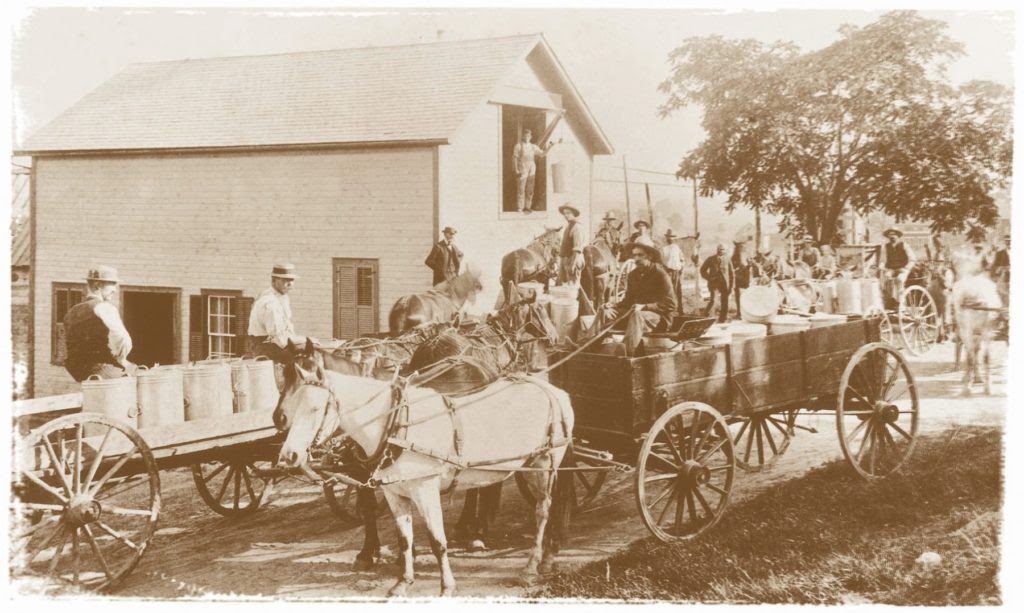
- Creamery 1919
- Distilleries
- Fisher Family in Cabot
- Foster Covered Bridge
- Maple Glen Farm History
- Spaulding's Cabot Plains Farm
- John Henry Senter
- Logging on Joe's Pond
- Newspapers
- Osgood Family
- Osgood Family Tree
- They lived or worked in Cabot
- Thomas Osgood, by Mary Carpenter, 1975
- Zerah Colburn Math Prodigy
- Zerah Colburn'S family
- MYSTERY SLIDES
- Rufus Simeon Whittier
- Quilt Goes West 1856
This is only a sampling. The full profiles — Zerah Colburn and the Colburn family, the Creamery, the Osgood and Fisher families, John Henry Senter, the businesses of 1877, and more — are held in the Society's research center. To trace an ancestor or learn more, please contact the Society. Can you help identify a Mystery Slide? We'd love to hear from you.